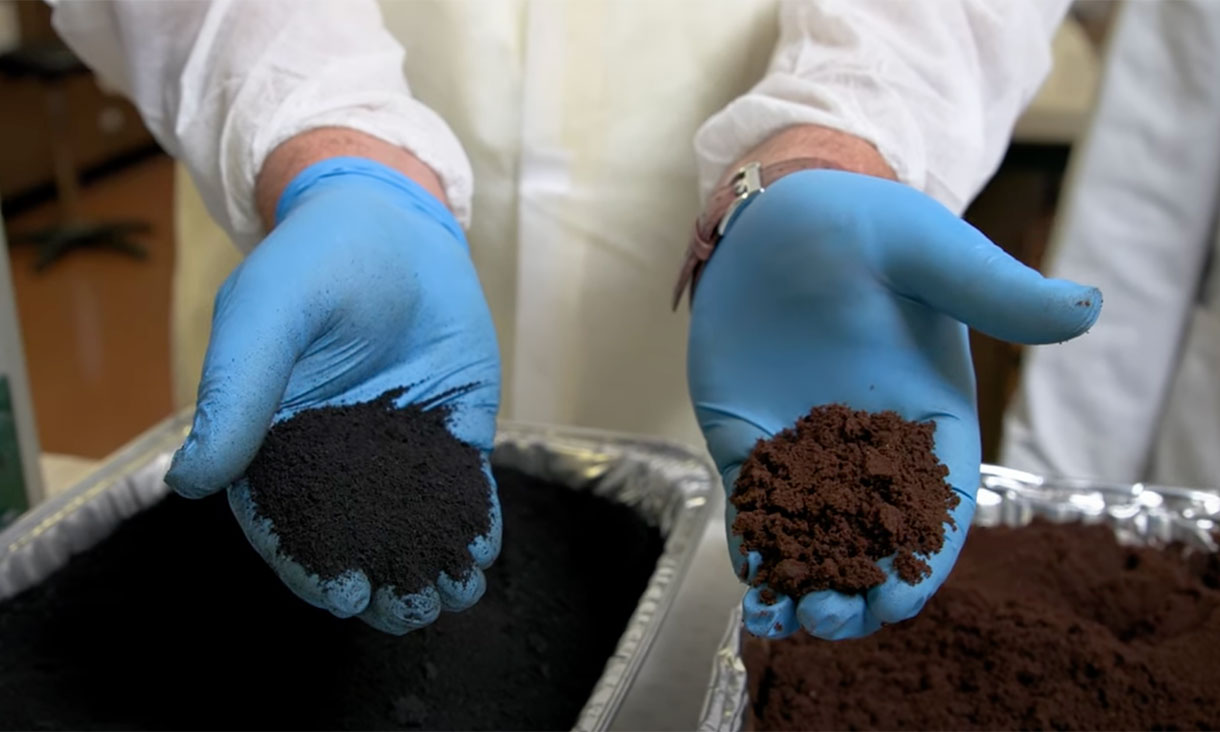

Low-cost innovation boosts green hydrogen production
RMIT researchers and international collaborators have demonstrated a new way to significantly increase green hydrogen production using low cost materials, offering a potential pathway to cheaper clean fuel.

New study advances dry mRNA vaccine patch design
New research could help make future mRNA vaccines easier to store and distribute.

New approach boosts microplastic removal from wastewater
RMIT University researchers have developed a more effective way to capture microplastics from wastewater, using a combination of microbubbles and nanobubbles to achieve removal rates of more than 90% before pollution reaches waterways.

New Food Innovation Hub set to advance health-focused food systems
The RMIT Food Innovation Hub is a nexus for researchers and industry to collaborate and build more resilient, regenerative and health-focused food systems.

Ultrasound unlocks protein from cauliflower waste
An RMIT innovation uses ultrasound to extract leaf protein from discarded cauliflower leaves, identifying a potential new use for vegetable scraps.

Tiny chip could help cameras spot hidden details
A tiny new chip could give cameras and sensing systems a far sharper view of the world, helping them detect subtle differences in materials and environments that standard colour imaging systems cannot see.

Researchers launch project to improve autism detection and care for children born preterm
RMIT experts will contribute to MICRO-NEST, a €6 million ($9.8 million) Horizon Europe project applying innovative approaches to identify markers of autism in children born before 37 weeks of gestation.

RMIT welcomes largest cohort of BITS-RMIT Higher Education Academy students to Melbourne
BITS Pilani students visited RMIT for a taste of Melbourne, before returning for their final study phase in 2027.